Salt Air, Sand, and Pets: Flooring for Tampa Bay Coastal and Pet-Heavy Homes
Double-click to edit...
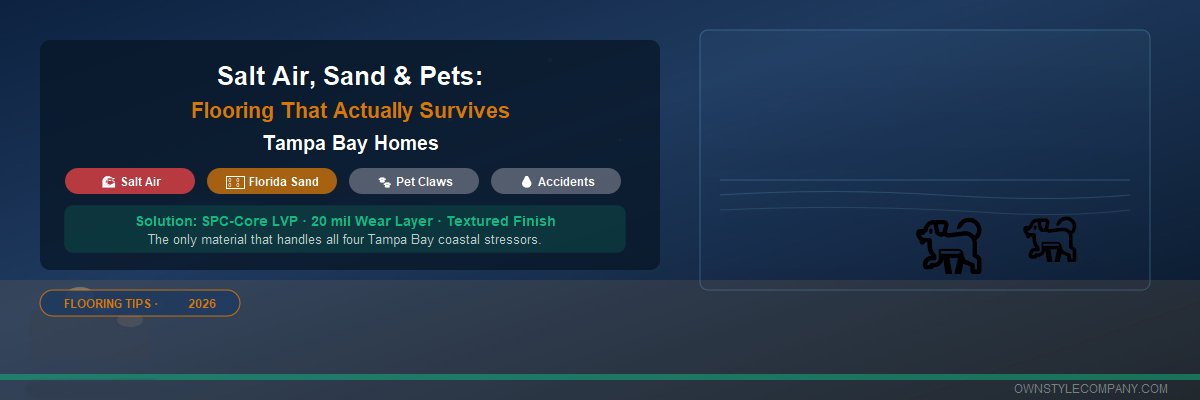
Tampa Bay homes near the coast — St. Pete, Clearwater, South Tampa near the bay, Riverview close to the water — face a combination of conditions that most flooring was not specifically designed to handle at the same intensity: salt air that increases ambient moisture, Florida sand that acts as abrasive under daily foot traffic, and pets whose claws and accidents create constant surface stress. The short answer: 12 mil or thicker LVP with an SPC core is the best all-around choice for these conditions.
What Does Salt Air Do to Flooring in Coastal Tampa Bay Homes?
Salt air carries microscopic salt particles that are hygroscopic — they actively attract and retain moisture from the surrounding air. When salt deposits settle on flooring surfaces or penetrate through doors and windows, they create micro-environments of sustained moisture on the floor surface.
• Solid hardwood: salt air accelerates the expansion-contraction cycle and interacts with wood finishes, causing premature dulling and finish failure.
• Laminate: the top layer resists surface salt, but salt that penetrates through seams reaches the HDF core, which absorbs moisture and swells.
• LVP: the vinyl surface is resistant to salt deposits and the stone or plastic core does not absorb moisture. The most durable option in salt-air environments.
• Tile: unaffected by salt at the surface. Grout lines can accumulate salt deposits over time if not regularly cleaned.
What Does Sand Do to Your Floors Over Time?
Florida's soil is predominantly fine silica sand. When tracked onto a floor and not swept immediately, each step grinds the sand particles against the floor surface. On LVP, this gradually dulls the wear layer. On hardwood, it scratches the finish. On laminate, it creates micro-abrasions in the top coating that increase over time.
• Entry mats at every exterior door — the single most effective intervention. Reduces tracked sand by an estimated 60–70%.
• More frequent sweeping: in sandy areas, sweep or dust-mop every other day rather than weekly.
• Textured LVP finish: micro-textured surfaces hide light scratches and sand abrasion better than high-gloss finishes.
Which Flooring Types Survive Pets in Florida Homes?
LVP — best overall for pets
LVP handles the two primary pet hazards — accidents and claw scratches — better than any other material. It is 100% waterproof, so urine that is cleaned up promptly does not penetrate the surface. Choose textured finishes over high-gloss — they hide scratches better.
Tile — durable but demanding
Tile is scratch-proof and fully waterproof. But grout lines accumulate pet hair, dander, and dried urine that is difficult to clean thoroughly. Large-format tiles with minimal grout lines are better for pet owners.
Laminate — not recommended for pet-heavy homes
Even one untreated accident that soaks into a seam can swell the HDF core and permanently damage the boards in that area. Homes with multiple pets or incontinent animals should not install laminate.
Hardwood — the most vulnerable option
Solid hardwood is poorly suited for Tampa Bay pet homes. Dog claws scratch hardwood faster than any other surface, and the scratches are permanent without sanding and refinishing. Pet urine causes black staining that penetrates deeply.
What Wear Layer Thickness Do You Need for Pets?
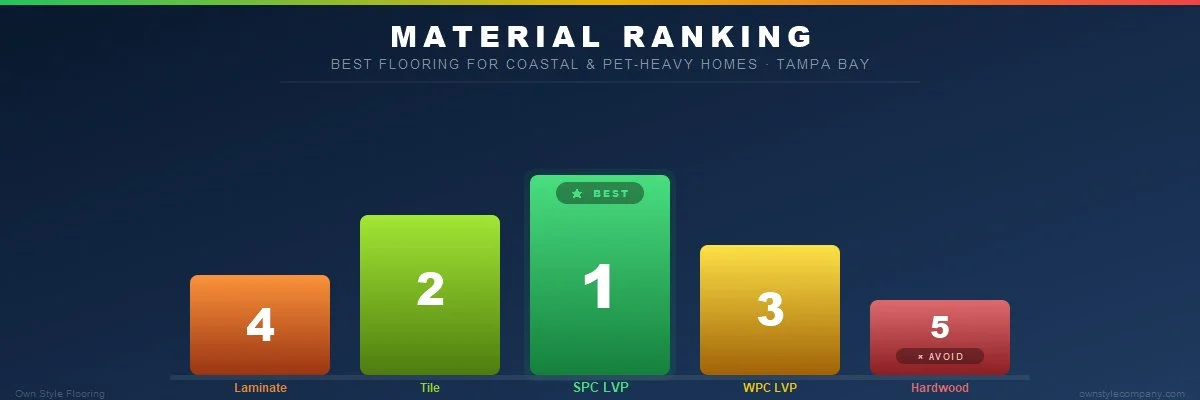
• Cats and dogs under 30 lbs: 12 mil minimum.
• Medium dogs (30–60 lbs): 20 mil recommended.
• Large dogs (60+ lbs) or multiple dogs: 20–28 mil.
• Commercial pet facilities (groomers, veterinary offices): 28 mil or above.
What Are the Best Flooring Options for Coastal Tampa Bay Homes in 2026?
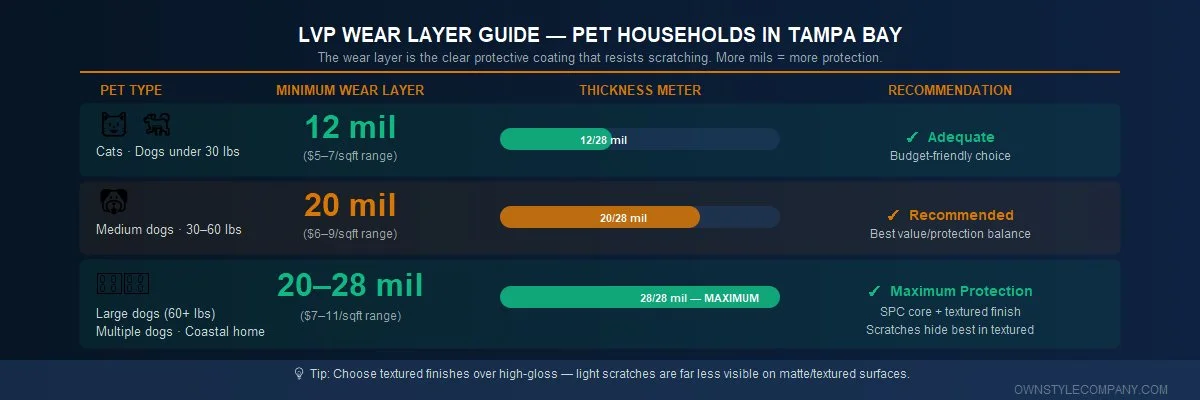
• First choice: SPC-core LVP, 20 mil wear layer, textured finish, click-lock installation. Handles salt air, sand abrasion, pet accidents, and AC cycling.
• Second choice: Porcelain tile with large format and minimal grout lines, epoxy grout. Indestructible surface but harder underfoot and more demanding to clean in pet homes.
• Conditional: WPC-core LVP for interior-only rooms with consistent climate control. Softer underfoot, which benefits large dogs that rest on the floor.
• Avoid for these conditions: laminate, solid hardwood, engineered hardwood in rooms that open to outdoor coastal areas.
How Do You Maintain Flooring in a High-Salt, High-Sand Environment?
• Sweep or dust-mop every other day — sand abrasion is prevented by frequency, not by products.
• Use pH-neutral floor cleaner — salt and pet cleaners are often alkaline and can damage LVP finishes.
• Clean pet accidents immediately — even waterproof LVP can allow urine to seep through seams if left for extended periods.
• Replace entry mats quarterly — they accumulate sand and salt that redeposit if mats are not washed.
What Does Flooring at Tampa Bay Install Most in Coastal and Pet-Heavy Tampa Bay Homes?
In coastal Tampa Bay homes and homes with dogs, our most frequent installation is SPC-core LVP with a 20 mil wear layer in a textured finish, click-lock floating installation over concrete slabs with proper moisture barrier. For cats and smaller dogs, 12 mil LVP is appropriate and more budget-friendly.
Flooring at Tampa Bay serves coastal and inland Tampa Bay communities including South Tampa, Riverview, Brandon, Seffner, and surrounding Hillsborough County. Contact us at operations@ownstylecompany.com or (813) 455-5756, or visit ownstylecompany.com.
FREQUENTLY ASKED QUESTIONS
-
Salt air carries microscopic salt particles that are hygroscopic — they attract and hold moisture. On wood-based flooring, this creates constant elevated surface moisture that accelerates the expansion-contraction cycle. Salt deposits also etch floor finishes over time, dulling the surface. LVP is resistant to salt air at the surface; solid hardwood and laminate are significantly more vulnerable.
-
Florida sand is fine but abrasive. When tracked indoors, it acts like sandpaper with every step, gradually dulling the wear layer on LVP and the finish on hardwood. Homes near beaches or with sandy yards require more frequent sweeping and benefit from entry mats at all exterior doors.
-
SPC-core LVP with a 20 mil or thicker wear layer is the best overall choice. It handles pet accidents (waterproof), resists claw scratches better than most materials, and is easy to clean. Choose textured finishes rather than high-gloss — scratches show less on textured surfaces.
-
Cats and dogs under 30 lbs: 12 mil minimum. Medium to large dogs (30–60 lbs): 20 mil minimum. Multiple large dogs: 20–28 mil. The wear layer is the clear protective coating over the printed design — it is what resists scratching.
-
LVP is 100% waterproof at the plank level, so pet urine that is cleaned up promptly does not penetrate the surface. If urine seeps through seams and reaches the subfloor, it can cause odor and subfloor damage. In homes with frequent pet accidents, ensure seams are tight and apply seam sealer at high-risk areas.
-
Yes. Own Style Flooring installs LVP and other pet-appropriate flooring across the Tampa Bay area. Contact operations@ownstylecompany.com or (813) 455-5756, or visit ownstylecompany.com.