Tile vs LVP in Tampa Kitchens and Bathrooms: Where Each One Wins
Double-click to edit...
Both tile and LVP (Luxury Vinyl Plank) are fully waterproof and technically appropriate for Tampa Bay kitchens and bathrooms. In most flooring conversations, both materials pass the first filter. The real question is where each one wins — and where the other is the smarter choice.
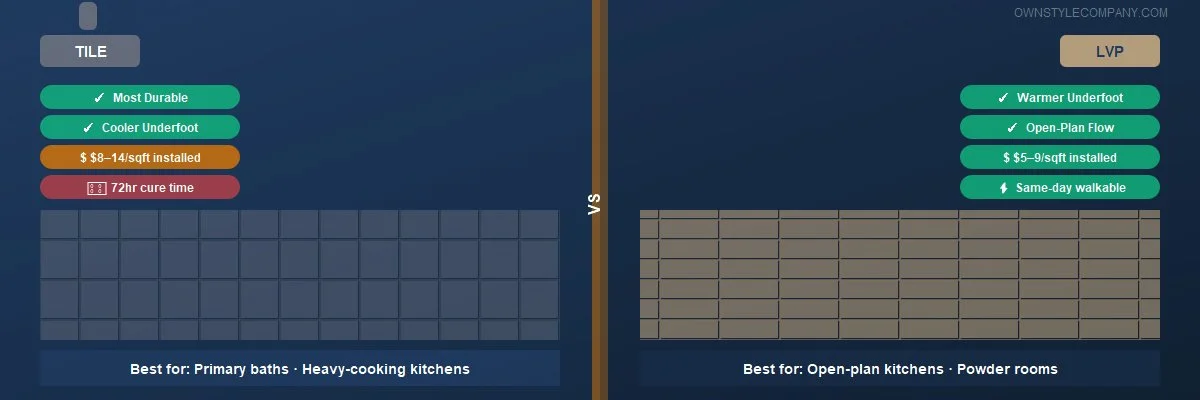
The short answer: tile wins on durability and raw heat and moisture resistance. LVP wins on budget, comfort, installation speed, and visual continuity with adjacent living spaces.
What Makes Both Good Options in Tampa Bay?
• High ambient humidity: both handle this without warping or absorbing moisture.
• Frequent water exposure: Tampa Bay families track in rain, pool water, and condensation year-round. Both are fully waterproof at the surface.
• Open-plan design trends: many Tampa Bay homes built after 2000 have kitchens opening directly into living rooms. LVP handles visual continuity better than tile.
• Long cooling seasons: cold tile underfoot is a daily experience. LVP's warmer feel is a real comfort advantage across the cooling season.
Tile vs LVP in Tampa Bay Kitchens
When tile wins in the kitchen
Tile is the professional standard for heavy-cooking kitchens. It handles hot items dropped from the stove, grease splatter, and heavy foot traffic better than any other material. Large-format tiles (18x18 or 24x24) reduce grout lines and cleaning effort. For galley kitchens or any space where the stove and oven are central to daily life, tile holds up better over a 20-year horizon.
When LVP wins in the kitchen
For open-plan kitchens that flow into living rooms, LVP creates a seamless floor without transition strips. If the living area has LVP or wood-look flooring, continuing it into the kitchen avoids visual breaks that make smaller Tampa Bay homes feel chopped up. LVP is also faster to install — no mortar curing time — and noticeably warmer underfoot after hours of standing while cooking.
Tile vs LVP in Tampa Bay Bathrooms
Primary bathrooms with showers or soaking tubs
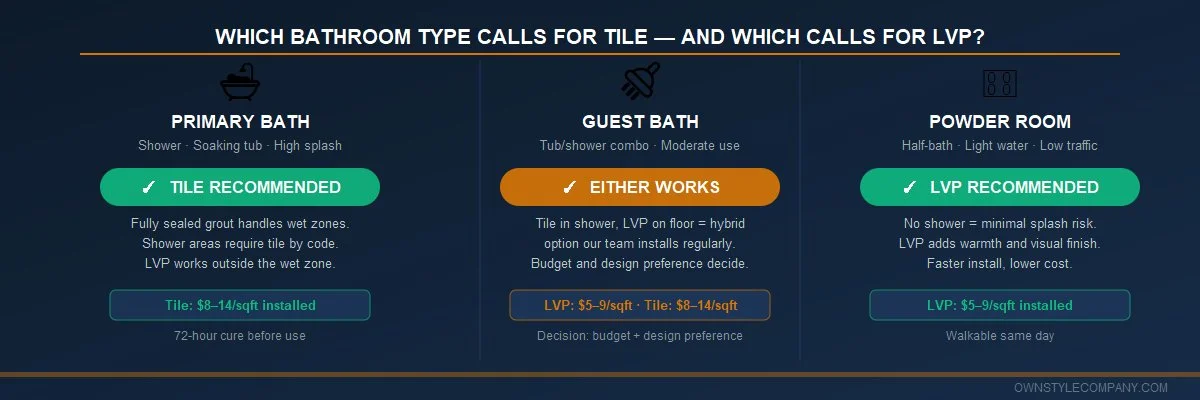
Tile is the professional standard. Shower areas, wet zones around freestanding tubs, and high-splash areas near vanities need a fully sealed surface. Tile with properly applied grout and sealer creates that seal. LVP should not be installed directly in wet shower zones — water penetrates at seams and can damage the subfloor.
Powder rooms and half-baths
LVP is an excellent choice for powder rooms with light water exposure. No shower means minimal splash risk, and the visual warmth of LVP makes these spaces feel more finished. Installation is faster and cost is lower.
Guest bathrooms with a tub/shower combo
Either works. Tile in the shower, LVP outside the wet zone with a proper transition is a common and practical compromise. Flooring at Tampa Bay installs this hybrid configuration regularly across Tampa Bay.
What Does Each Option Cost Installed in Tampa Bay in 2026?
• Tile — 12x12 or 18x18 standard: $8–11 per square foot installed.
• Tile — Large format 24x24 or pattern (herringbone, chevron): $11–14 per square foot installed.
• LVP — Mid-range 20 mil wear layer: $5–7 per square foot installed.
• LVP — Premium SPC 28 mil wear layer: $7–9 per square foot installed.
Which Is Harder to Install — and Does That Affect Your Timeline?
• Tile: substrate preparation, mortar, layout, setting, grout, sealing. The area is unusable for 24–48 hours after grouting. Full cure: 72 hours.
• LVP: subfloor preparation, 48-hour acclimation, click-lock installation, transition strips. Walkable immediately after installation.
In a kitchen renovation, the tile vs LVP timeline difference can be 3 to 5 days of additional downtime. For a primary bathroom serving a family, that is a meaningful practical consideration.
What Do Tampa Bay Homeowners Get Wrong About Tile vs LVP?
• "LVP is not as durable as tile." — LVP with a 20 mil or higher wear layer handles residential traffic for 20+ years in Tampa Bay conditions.
• "Tile is always the safer choice for wet areas." — Tile that is improperly grouted or over a compromised substrate fails. Well-installed LVP outside the direct wet zone outperforms poorly-installed tile every time.
• "You cannot mix tile and LVP in the same house." — Many Tampa Bay homes use tile in wet-heavy areas and LVP throughout the rest. Transition strips and consistent color palette make the transitions clean.
Which Does Flooring at Tampa Bay Recommend — and Why?
Our recommendation is always room-specific. Master bathroom: tile in wet zones. Open-plan kitchen: LVP for visual continuity. Galley kitchen: tile for durability. Powder rooms: LVP. Guest bathrooms: budget and design preference decide.
Flooring at Tampa Bay provides free estimates that include a room walk-through and material recommendation. Contact us at operations@ownstylecompany.com or (813) 455-5756, or visit ownstylecompany.com.
-
Both are waterproof and appropriate. Tile is more durable under heavy impact and high heat near stoves. LVP is warmer underfoot, quieter, faster to install, and flows naturally into adjacent living areas without a transition strip. For open-plan kitchens connected to living rooms, LVP creates visual continuity. For galley or heavy-cooking kitchens, tile is the harder-wearing choice.
-
For primary bathrooms with heavy water exposure — showers, soaking tubs, wet zones — tile is the professional standard. LVP handles incidental moisture well but should not be installed directly in shower areas. For powder rooms and guest bathrooms with low water exposure, LVP is a practical and cost-effective choice.
-
Tile installation runs $8–14 per square foot installed, depending on tile size, pattern complexity, and subfloor preparation. LVP installation runs $5–9 per square foot installed. On a 200 sqft primary bathroom, that is roughly $600–1,000 in additional cost for tile.
-
Tile feels cooler than LVP because it conducts heat away from your feet. In Tampa Bay's warm climate, many homeowners appreciate this in summer. In winter mornings, tile can feel cold. LVP with a foam underlayer retains some warmth. An area rug or in-floor radiant heating solves the cold-tile concern.
-
Tile installation is significantly more labor-intensive. It requires substrate preparation, mortar, layout planning, grout, sealing, and a 24–48 hour cure before the area can be used. LVP click-lock installation can be completed and walked on the same day. This difference in labor is one reason tile costs $3–5 more per square foot installed.
-
Yes. Own Style Flooring installs both in kitchens and bathrooms throughout the Tampa Bay area, including Brandon, Riverview, South Tampa, and Hillsborough County. Contact operations@ownstylecompany.com or (813) 455-5756, or visit ownstylecompany.com for a free estimate.