After the Flood: What to Do with Your Floors in the First 72 Hours
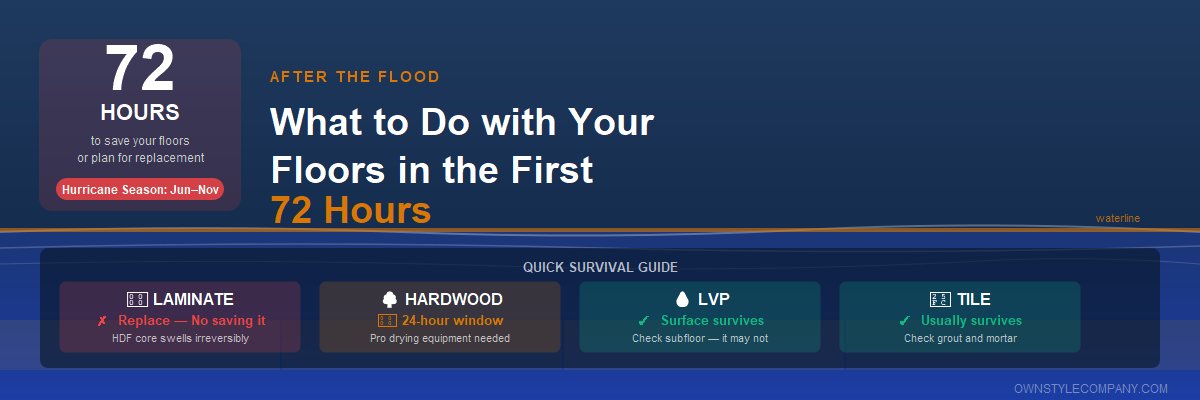
If your floors were flooded, the first 72 hours determine whether they can be saved or need complete replacement. The key factors are water type, how long they were submerged, and the flooring material. Laminate almost never survives flooding — the HDF core swells irreversibly. LVP is waterproof at the surface, but the subfloor beneath it may be compromised. Hardwood can sometimes be saved if professional drying equipment is deployed within 24 hours. In Tampa Bay, where hurricane flooding can combine storm surge with sewage backflow, professional assessment before any decisions is critical.
What Are the First Steps After Flood Water Enters Your Home?
Before touching anything:
• Confirm the home is structurally safe. Do not enter if the ceiling shows signs of collapse or if electrical fixtures are submerged.
• Stop the water source if possible. For plumbing failures, locate the main shutoff. For storm flooding, wait for water to recede naturally.
• Document everything. Photograph every room, every floor, every waterline — before removing a single piece of flooring. Insurance claims require before-cleanup documentation.
• Contact a licensed water mitigation company within the first 24 hours. They have industrial dehumidifiers and moisture meters that consumer equipment cannot replicate.
Which Floor Materials Survive Flooding — and Which Do Not?
Laminate — almost always a total loss
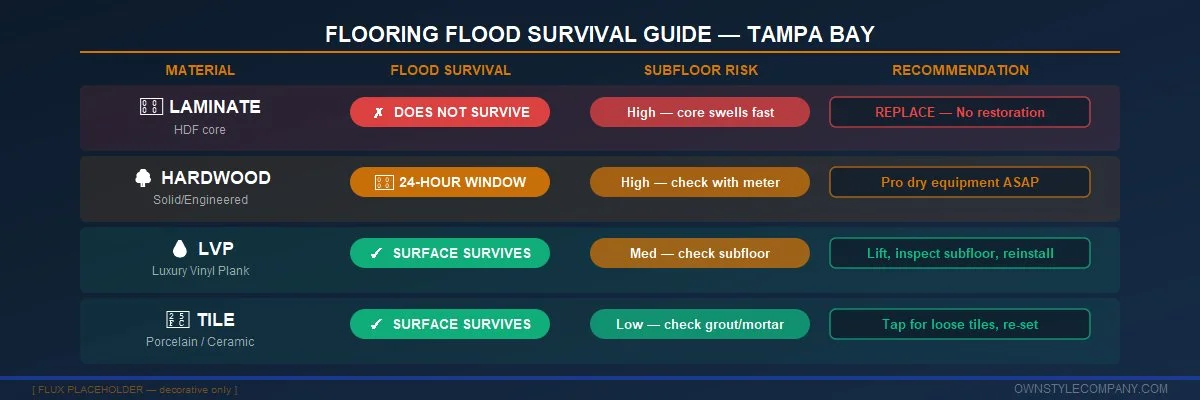
Laminate has an HDF core that swells within hours of water contact. Once swollen, it cannot be restored. If your laminate was submerged or in contact with standing water for more than a few hours, plan for replacement.
LVP — the surface survives, check the subfloor
LVP is 100% waterproof at the product level. However, water migrates under LVP through seams and around the perimeter. The subfloor beneath can saturate and develop mold even when the LVP surface looks perfect. Always remove LVP after a flood and inspect the subfloor with a moisture meter before reinstalling.
Hardwood — possible to save within 24 hours
Solid and engineered hardwood can sometimes be saved, but the window is narrow. Professional drying equipment must be placed within 24 hours of the flood. Tampa Bay's ambient humidity (often 85%+) makes air-drying impossible at scale. Even with equipment, warping, cupping, and staining are common outcomes.
Tile — almost always survives the surface
Tile itself is unaffected by water. However, the grout can crack, the setting mortar can be weakened, and the subfloor beneath can be damaged. After flooding, tap tiles with a coin to check for loose or hollow-sounding areas.
What Does the 72-Hour Rule Mean for Tampa Bay Flooding?
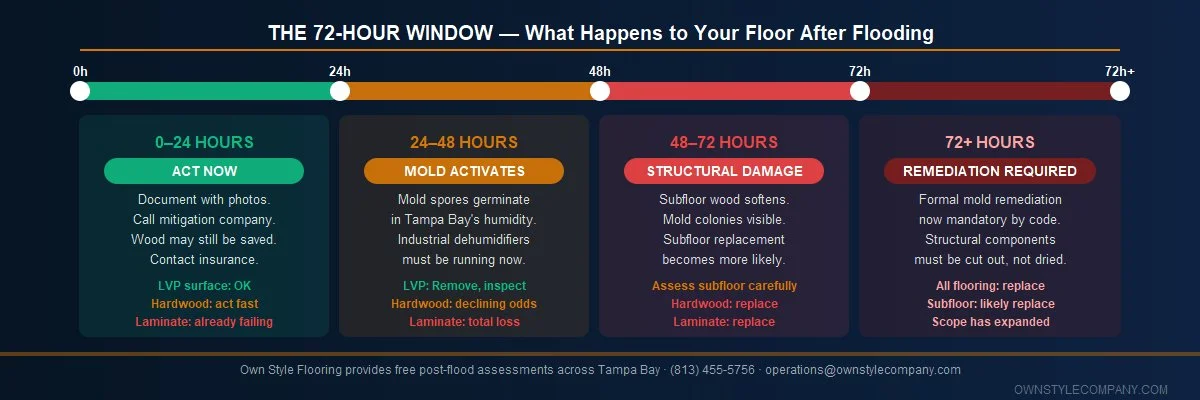
• 0–24 hours: structural wood is wet but not yet beginning permanent degradation. Mold spores are present but not yet activated.
• 24–48 hours: in Tampa Bay's 80%+ outdoor humidity, mold spore germination begins on wet organic surfaces.
• 48–72 hours: mold colonies become visible in saturated areas. Structural wood begins to soften and lose bearing capacity.
• 72+ hours: mold remediation becomes a formal requirement. Damaged structural components must be cut out, not dried.
What About the Subfloor — Is That the Real Problem?
In our post-flood assessments across Tampa Bay, the subfloor is damaged more often than the surface flooring. Homeowners focus on what they can see — but the structural platform the flooring sits on determines whether any new flooring will last.
• Soft spots or bounce when walking on a dried floor — indicates OSB or plywood that has delaminated.
• Visible mold on the underside of removed flooring panels.
• Moisture meter readings above 15% in the subfloor after apparent drying.
Does Homeowner's Insurance Cover Flood Damage to Floors in Florida?
Standard homeowner's insurance in Florida typically does not cover damage from rising water. That requires a separate flood insurance policy, usually through the NFIP. What homeowner's insurance typically covers: damage from a burst pipe, appliance leak, or roof failure that allows rain in. Before removing any flooring, contact your insurance company and document all damage.
How Much Does Post-Flood Floor Replacement Cost in Tampa Bay in 2026?
• LVP replacement (material + labor): $5–9 per square foot. Most common post-flood choice.
• Laminate replacement: $4–8 per square foot. Not recommended for homes with recurring flood risk.
• Subfloor repair or replacement: $2–4 per square foot additional.
• Moisture remediation (if mold is present): $3–10 per square foot depending on scope — must precede flooring installation.
Flooring at Tampa Bay provides free floor assessments for post-flood situations in the Tampa Bay area. Contact us at operations@ownstylecompany.com, call (813) 455-5756, or visit ownstylecompany.com.
FREQUENTLY ASKED QUESTIONS
-
Ensure the home is structurally safe and document all damage with photos and video before touching anything — insurance claims require before-cleanup documentation. Contact a water mitigation company within the first 24 hours. In Tampa Bay, mold begins growing within 48 hours in standing water conditions.
-
In almost all cases, no. Laminate has an HDF core that absorbs water rapidly and swells irreversibly. Once swollen, the core cannot be dried back to its original state. Laminate submerged for more than a few hours must be replaced entirely — there is no restoration process.
-
LVP is 100% waterproof at the product level and can survive flooding if the subfloor beneath it is also intact and properly dried. However, the subfloor — typically OSB or plywood — can be damaged even when the LVP surface appears fine. Always remove LVP after a flood and inspect the subfloor before reinstalling.
-
After 24 hours of saturation, mold spores begin activating in Florida's humidity. After 72 hours, structural wood components in the subfloor begin permanent damage. Laminate is gone within hours of saturation. Hardwood may survive if professional drying equipment is on-site within 24 hours.
-
Standard homeowner's insurance in Florida typically does not cover rising water (flooding). That requires a separate flood insurance policy through the NFIP or a private carrier. Damage from a burst pipe or appliance leak is typically covered. Always document damage before any cleanup.
-
LVP replacement runs $5–9 per square foot installed. Laminate runs $4–8 per square foot. If the subfloor requires repair, add $2–4 per square foot. Own Style Flooring provides free assessments for post-flood installations. Contact operations@ownstylecompany.com or (813) 455-5756.